Constraints and limitations
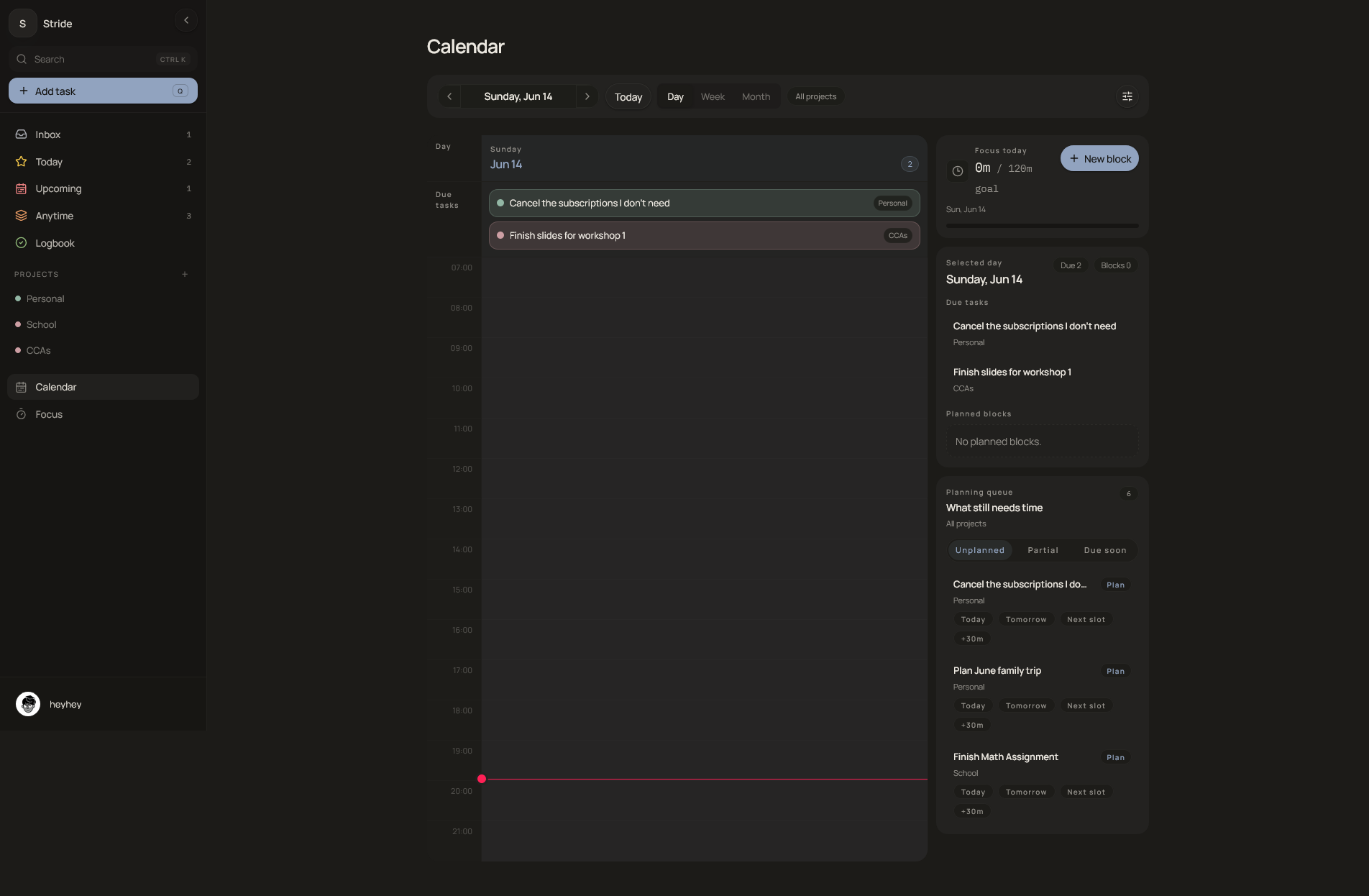
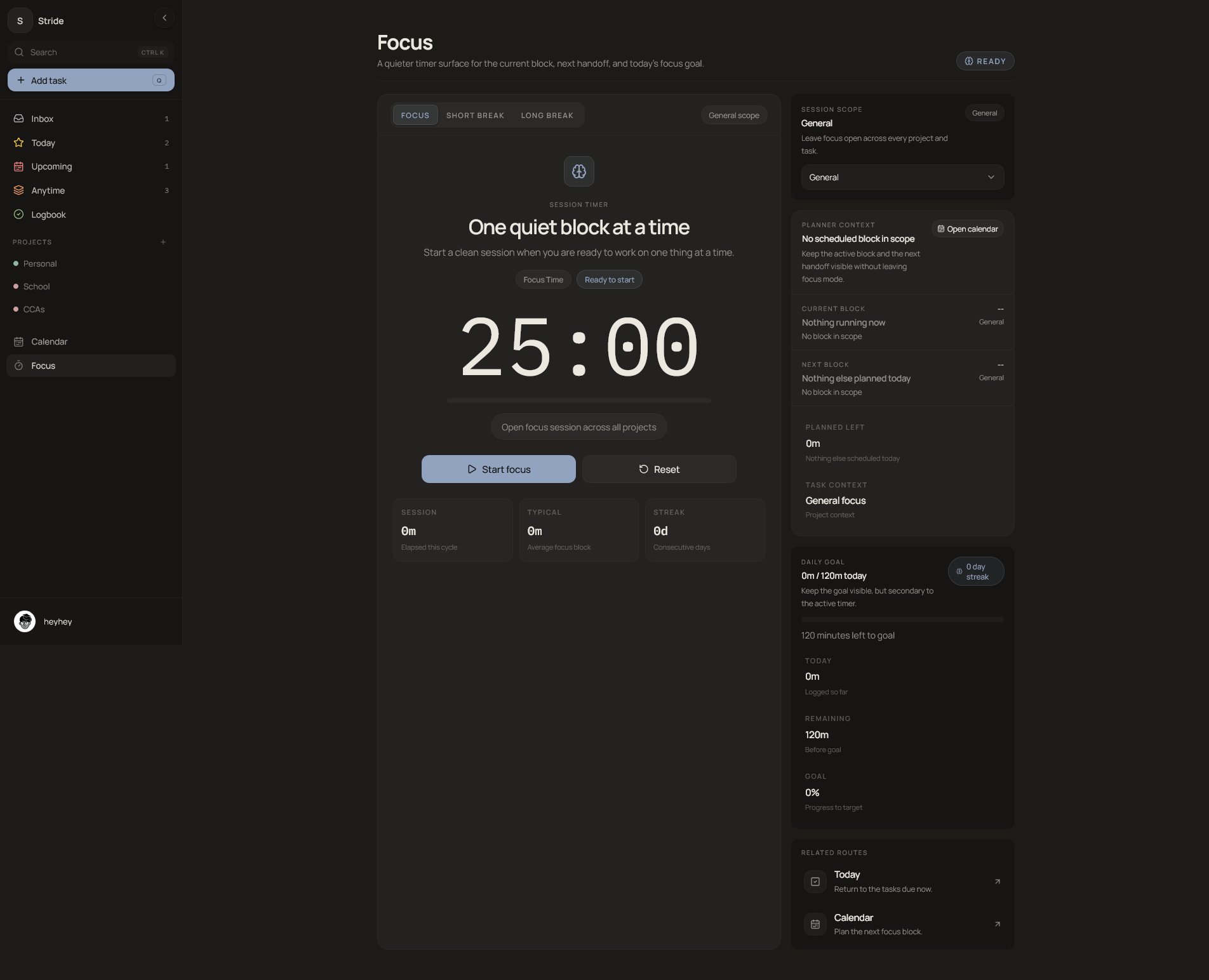
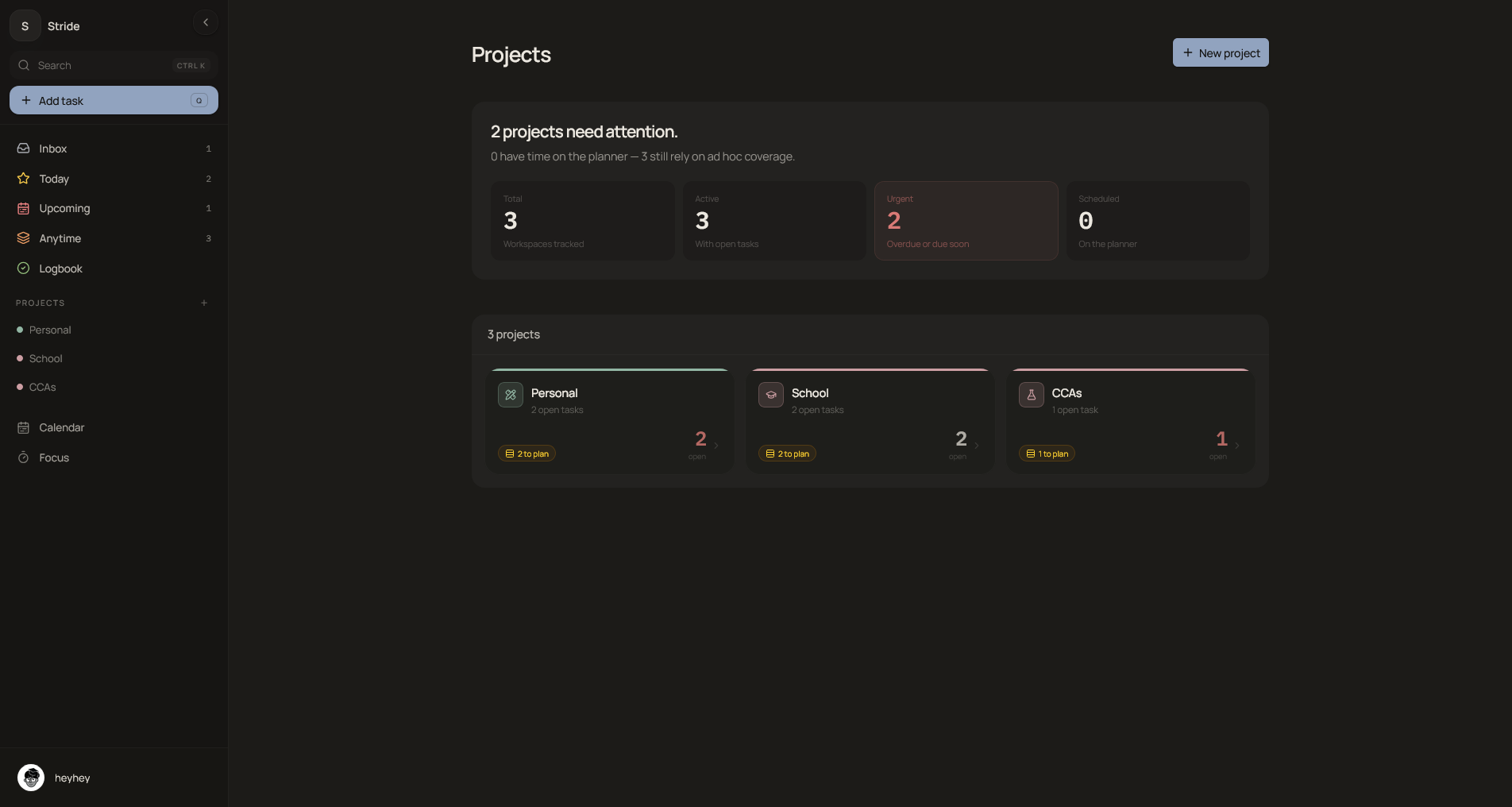
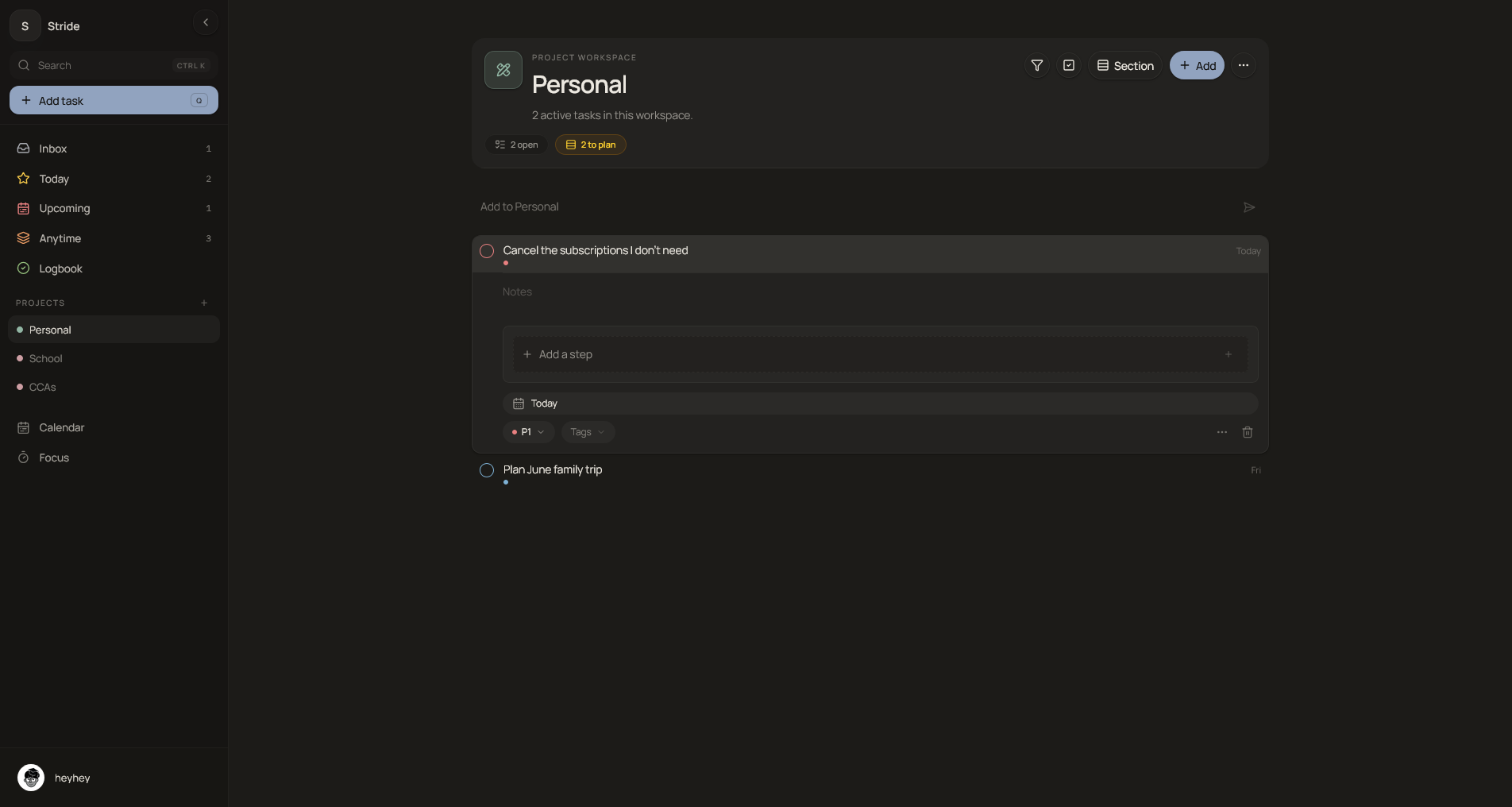
Stride was built as a portfolio MVP, not a production SaaS. The final version demonstrates
a connected task, planning, and focus workflow, but it depended on external services such
as Clerk, Supabase, OpenAI, Sentry, Vercel, and PostHog being configured correctly.
- Clerk. Provided authentication and route protection, with authenticated identity forwarded to Supabase through access tokens.
- Supabase. Supplied Postgres persistence, row-level security, realtime subscriptions, and Storage for task attachments and profile avatars.
- OpenAI. Powered the optional AI-assisted day overview through an authenticated, server-side Responses API route.
- Sentry. Added error monitoring and observability; its default PII setting would require privacy, consent, and retention review before reuse.
- Vercel. Supported deployment and Speed Insights for the original hosted application.
- PostHog. Provided optional product analytics instrumentation during development.
The app included foundations for collaboration, realtime updates, file storage, and
AI-assisted daily summaries. I would present those as implemented technical foundations,
not as production-proven systems.
The archived repository is best understood as evidence of full-stack product engineering,
workflow design, and system integration. If I continued the project, I would narrow the
scope, improve end-to-end test coverage, simplify deployment setup, and validate
collaboration flows with real multi-user usage.